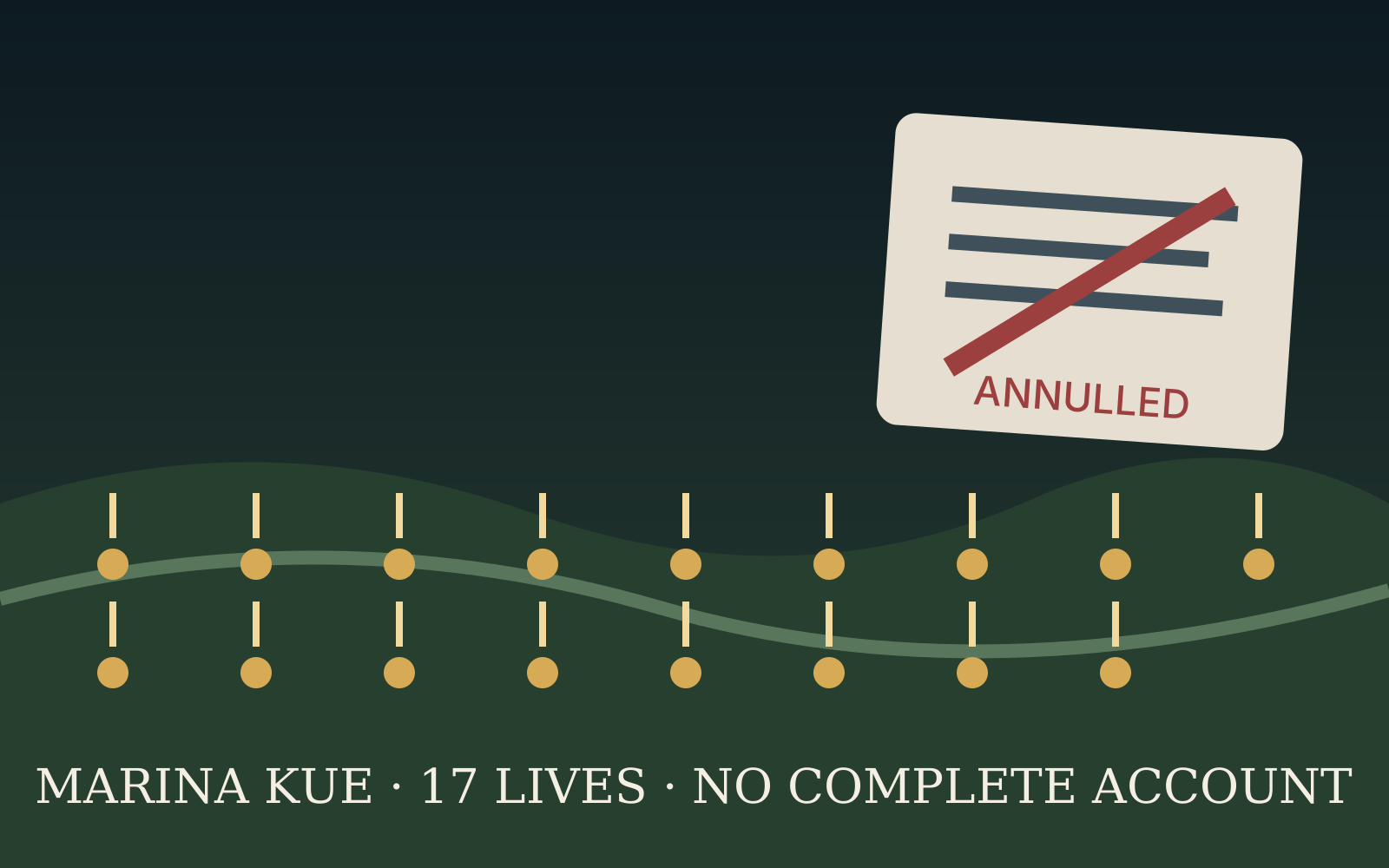
Status boundary: The eleven people prosecuted after Curuguaty are not treated as offenders. Their convictions were overturned and the Supreme Court ordered the remaining prisoners released. The archive also does not adopt competing claims about who fired first as established fact.
A disputed property and a lethal operation
Campesino families had occupied part of Marina Kue amid a long-running dispute over the property's ownership and demands that the land be included in agrarian reform. On the morning of June 15, a large police contingent arrived to execute a judicial operation. Officers and occupants were gathered at close range when gunfire began.
The result was one of the deadliest episodes in Paraguay's recent political history: eleven campesinos and six officers were killed. Contemporary accounts quickly advanced competing explanations, including a police-ambush narrative and allegations of excessive force or unidentified shooters. The evidentiary record never produced a final judgment capable of resolving all of those claims.
A one-sided investigative focus
The criminal case concentrated on campesino defendants accused in connection with the six police deaths. The UN human-rights chief later said the proceedings appeared not to have respected due-process guarantees and noted criticism that important evidence had not been collected or examined. The prosecution did not produce an equivalent adjudicated case establishing responsibility for the deaths of the eleven campesinos.
This asymmetry matters. It would be inaccurate to describe the initial convictions as a judicial account of all seventeen deaths, and equally inaccurate to treat criticism of the investigation as proof of a particular alternative theory.
The 2016 convictions
In July 2016, a trial court convicted eleven campesinos. International and Paraguayan observers challenged the evidentiary basis, the treatment of defendants and the absence of an effective investigation into the campesino deaths. The Office of the UN High Commissioner for Human Rights publicly called the outcome deeply troubling.
The convictions did not end the case. Defense lawyers pursued extraordinary review before the Criminal Chamber of Paraguay's Supreme Court, arguing that the prosecution had not proved individual criminal participation.
The Supreme Court reverses the case
On July 26, 2018, the Criminal Chamber overturned the convictions of all eleven defendants. The majority ordered the immediate release of those still imprisoned and rejected a new trial. Reporting on the decision records the court's criticism of the investigation and its conclusion that the prosecution had failed to demonstrate participation in the charged crimes.
That ruling is decisive for the archive's language: people once convicted in the trial are now described as acquitted defendants, not as perpetrators. The reversal also exposed the distance between a failed prosecution and a full accounting of the violence.
Political shock and unfinished accountability
Curuguaty immediately became part of a national political crisis. One week after the killings, Congress removed President Fernando Lugo through impeachment. The Organization of American States identified the Curuguaty deaths as the immediate background to that process while also noting the broader political tensions that preceded it.
Amnesty International welcomed the 2018 acquittals but stressed that the duty to investigate all seventeen deaths remained. Its assessment was especially direct about the eleven campesino deaths: no adequate accountability had followed. The case therefore remains unresolved in this archive, even though the prosecution of the eleven defendants has ended.
Current status
No final criminal judgment establishes a complete account of who caused the deaths at Marina Kue. The eleven campesino convictions are void; no retrial followed that Supreme Court ruling. This file will be updated only if a verifiable judicial or official development changes that status.
Questions that remain
Who fired first?
No final judgment established a complete answer. The page does not convert a disputed narrative into fact.
Did the acquittals resolve the killings?
No. They ended the failed prosecution of eleven campesino defendants but did not adjudicate responsibility for every death.
Why not call the defendants perpetrators?
Because the Supreme Court overturned their convictions and ordered release. Presumption of innocence and the final procedural outcome control the wording.