How this archive classifies the cases
“Adjudicated” records final criminal findings while preserving limits around punishment and higher-level responsibility. “Unresolved forced disappearance” records the binding international finding against the state without treating it as a criminal conviction of an individual. González’s fate, whereabouts and personal perpetrators remain unestablished by final domestic judgments.
Why name Rufino de la Cruz?
The driver was the fourth person murdered on 25 November 1960. The archive names him in the title so the case is not reduced to three famous victims while a fourth victim disappears from the record.
Why include political context?
The sisters’ work in the Fourteenth of June Movement and the repression of the Trujillo dictatorship explain the documented motive and state structure around the crime. Context is used to clarify the record, not to turn the victims into symbols at the expense of their individual lives.
Why symbolic artwork?
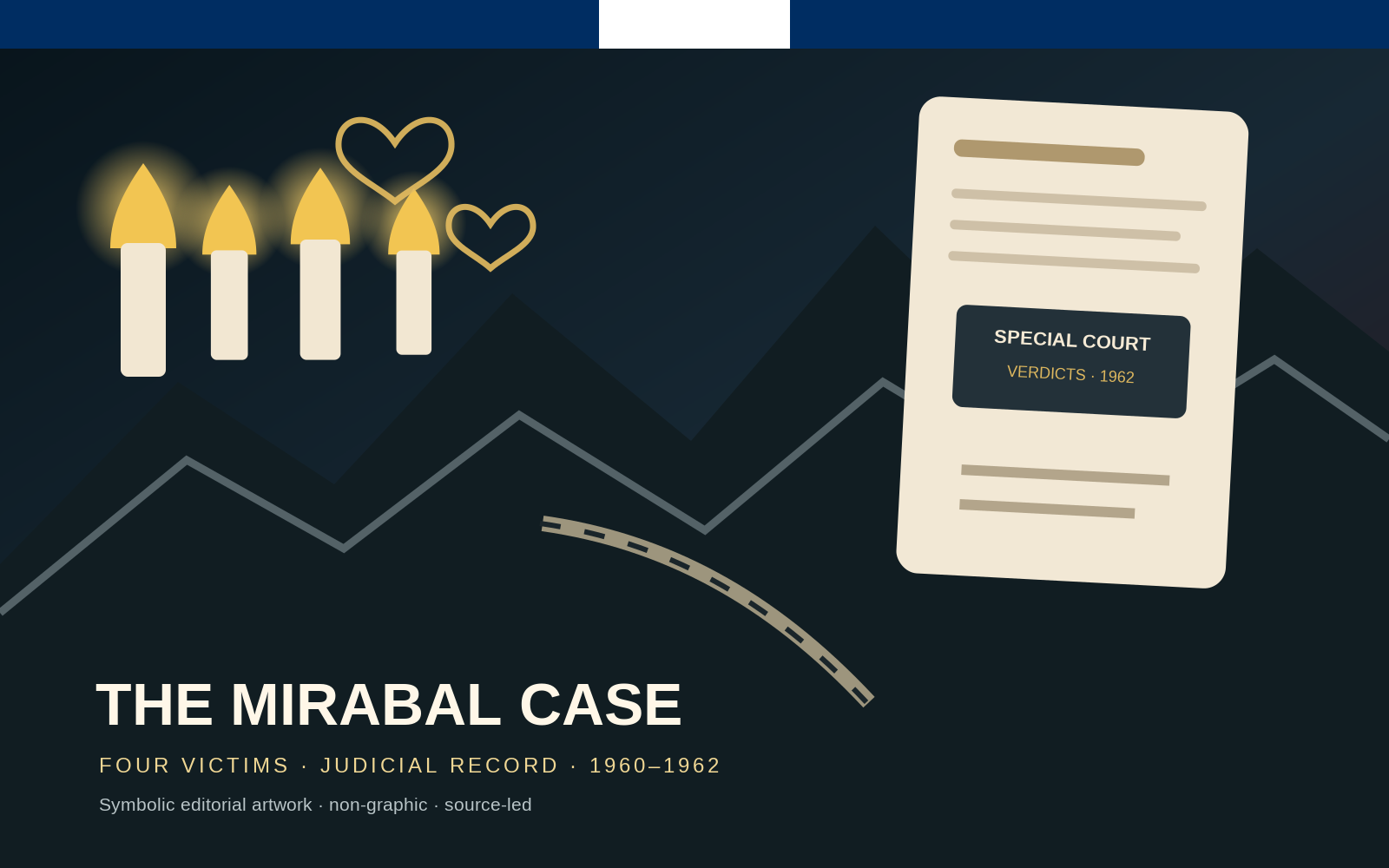
The national colors, mountain road, four memorial lights and court file are clearly editorial. They do not depict an invented victim, killer, vehicle or crime scene as authentic evidence.
Dominican Republic archive FAQ
How many Dominican Republic case files are published?
Seven verified files are published across political assassination, journalist murders, organized crime, family crime and forced disappearance.
Are all seven cases solved?
No. Five files are adjudicated or carefully bounded; Narciso González Medina’s disappearance and Gregorio García Castro’s murder remain unresolved in individual criminal responsibility.
Was the vehicle crash accidental?
No. Reliable historical records say the four victims were murdered and the vehicle was sent down the mountain road to disguise the killings as an accident.
Who ordered the killings?
Dominican institutional records, the United Nations and established historical reporting attribute the crime to Rafael Trujillo’s dictatorship. Trujillo died before the 1962 trial, so the archive distinguishes that historical attribution from a conviction entered against him.
Why is 25 November internationally significant?
The United Nations designated the date as the International Day for the Elimination of Violence against Women, honoring the three Mirabal sisters murdered on 25 November 1960.
Will more cases be added?
Yes, when a Dominican case has reliable sources, a clear current status and enough evidence for a substantive, victim-aware file.
← Return to all country archives