The Custodial Death of Archil Tatunashvili and the In-Absentia Sentences
A Georgian court imposed life sentences in absentia on Davit Gurtsiev and Alik Tamboev. Enforcement and wider responsibility remain unresolved.
Open case file →This source-led archive covers eight cases, including Archil Tatunashvili, the Khorava Street murders and the cases of Sandro Girgvliani, journalist Giorgi Sanaia, justice campaigner Yuri Vazagashvili, human-rights defender Vitali Safarov and Giga Otkhozoria. It separates convictions from investigative failures, disputed motives and enforcement gaps. Georgia here means the sovereign country, also known as Sakartvelo—not the US state.
“Solved” is limited to criminal responsibility established by a court. It does not erase documented investigative failures or convert wider allegations into findings.
A Georgian court imposed life sentences in absentia on Davit Gurtsiev and Alik Tamboev. Enforcement and wider responsibility remain unresolved.
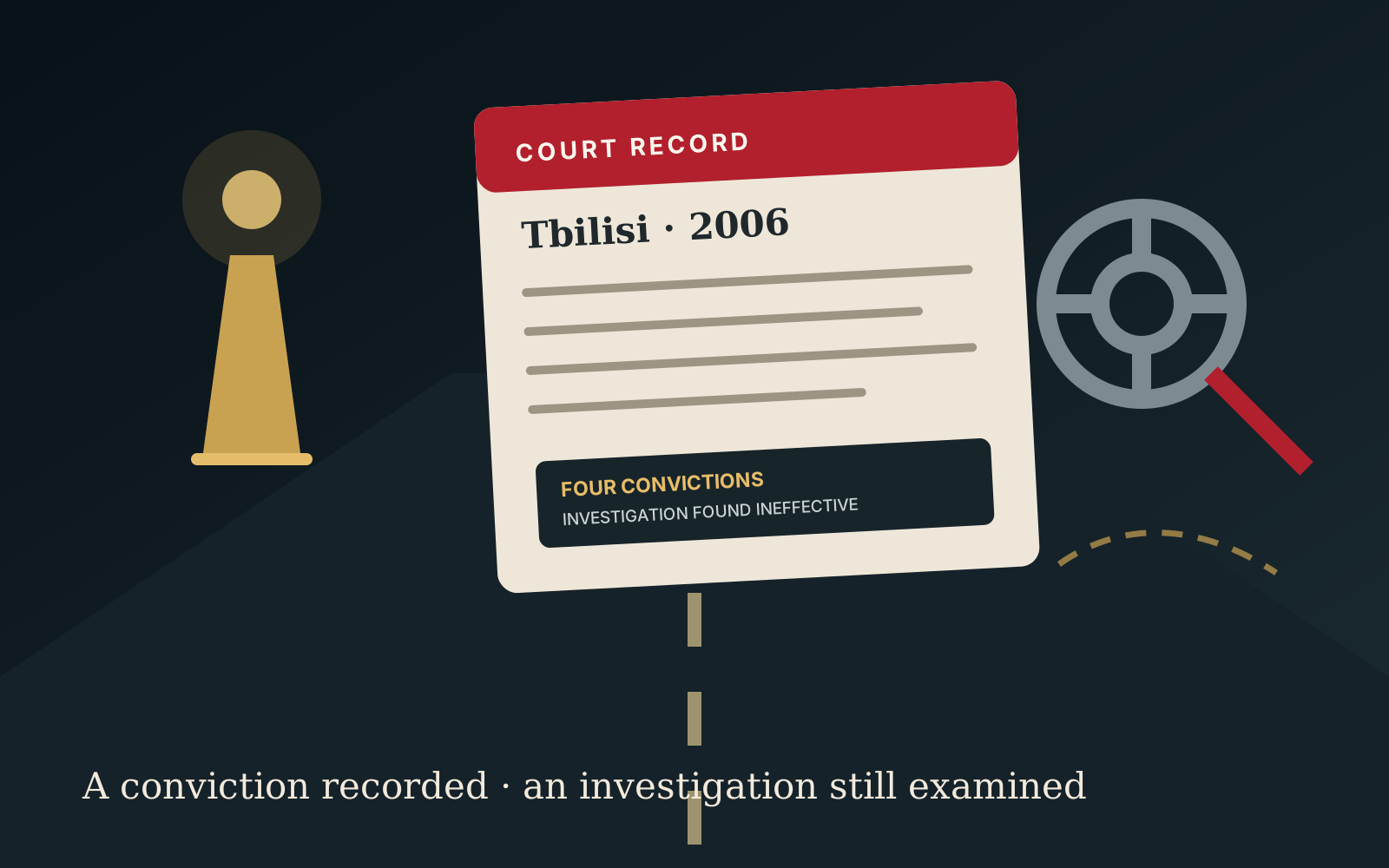
Open case file →Four Interior Ministry officers were convicted in 2006. A later European judgment found the investigation ineffective, while subsequent proceedings addressed the pardon that shortened the officers’ imprisonment.
Open case file →Grigol Khurtsilava received 13 years for killing the Rustavi 2 journalist. Sanaia's family rejected the stated motive, and no wider political sponsor was convicted.
Open case file →Former police officer Giorgi Sosanashvili received 20 years for planting the grenade that killed the justice campaigner at his son's grave.
Open case file →Giorgi Sokhadze and Avtandil Kandelakishvili received 15 years each. The courts upheld murder convictions but rejected the prosecution's ethnic-intolerance qualification.
Open case file →Rashid Kanji-Ogli received 14 years in absentia. A final ECHR judgment found Russia responsible, while enforcement of the Georgian sentence remains unresolved.
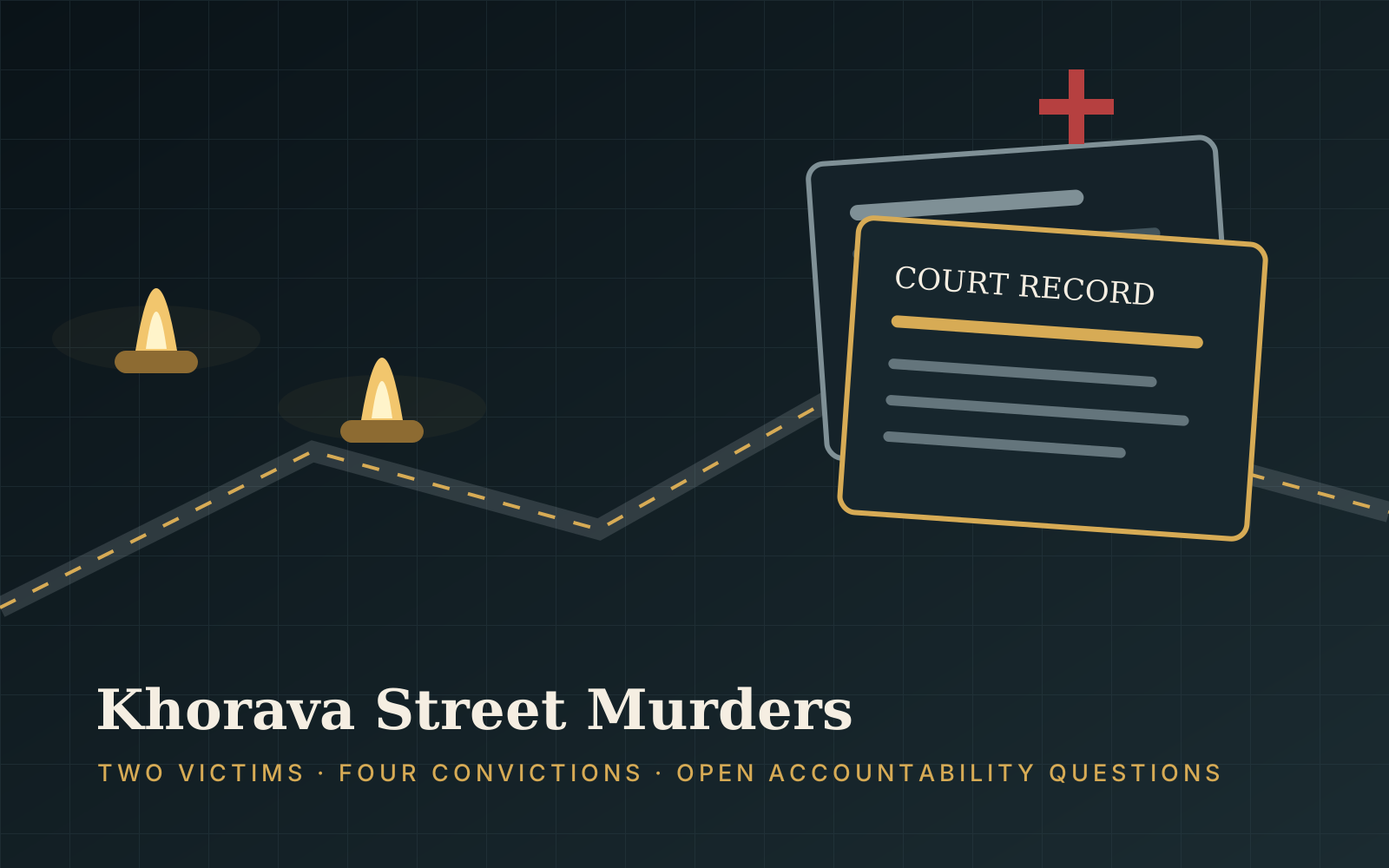
Open case file →Courts entered four murder-related convictions after two 16-year-olds were killed. The Public Defender documented serious failures in the original investigation.
Open case file →Cases without an individual criminal conviction, including deaths where a final human-rights judgment found investigative failure.
Seven files have court-established criminal responsibility, while Temirlan Machalikashvili's fatal security-operation case remains without an individual criminal conviction. Adjudicated does not mean every motive, organizer, institutional failure or enforcement problem was resolved.
Yes. The Khorava Street murders produced defendant-specific convictions, while the Public Defender documented serious failures in the original investigation. Those are separate findings and are presented separately.
Strasbourg judgments explain why domestic convictions can coexist with ineffective investigations, unenforced sentences or incomplete accountability.
The visual system uses memorial lights, court records and evidence motifs instead of reproducing injuries, inventing portraits or presenting illustrations as documentary evidence.
Crime by Region currently publishes eight verified Georgia case files: seven solved or adjudicated and one unresolved.
The archive includes Archil Tatunashvili, the Khorava Street murders and the cases of Sandro Girgvliani, Giorgi Sanaia, Yuri Vazagashvili, Vitali Safarov, Giga Otkhozoria and Temirlan Machalikashvili.
No officer was criminally convicted for Temirlan Machalikashvili's death. The ECHR found an ineffective investigation but insufficient proof of substantive state responsibility.
Yes. This page concerns Georgia, also called Sakartvelo, the sovereign country in the Caucasus—not the US state.