Victim-aware note: This account avoids graphic descriptions. It includes the documented domestic-violence warnings and offences in the conviction because they explain the institutional and judicial record, not for shock value.
The Beauchamp-Durán family
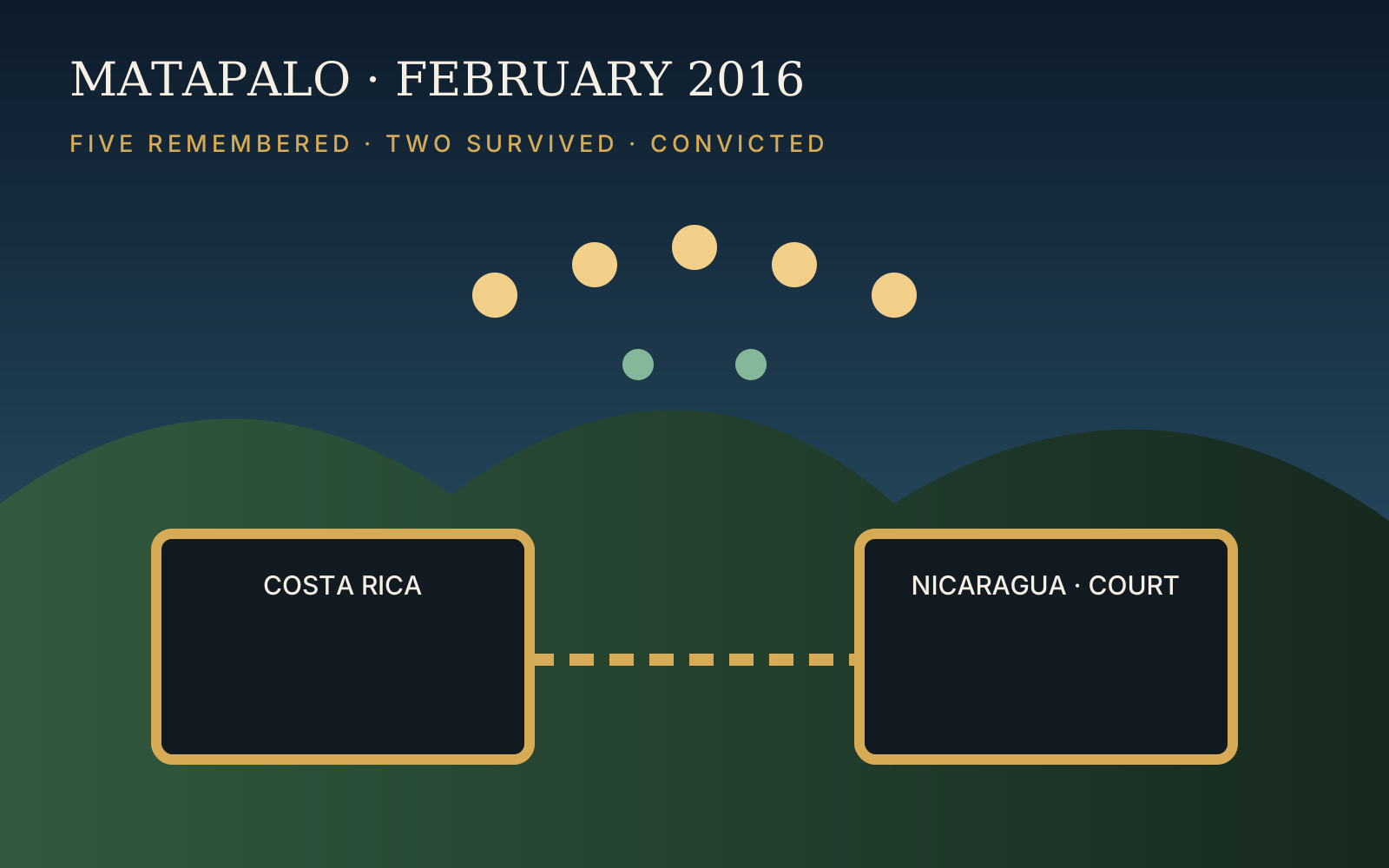
Yeimmy Jéssica Durán Guerra lived in Matapalo with her husband, Dirk Beauchamp, and their children. Public records and reporting identify the three children who died as Allison, twelve; Jack, eight; and Shantal, six. Two younger girls survived: one was seriously injured and the other, an infant, was found alive.
Salmerón had lived nearby and had maintained a relationship with Durán. That personal connection later became central to the prosecution. It also placed the killings within a documented history of domestic abuse rather than an inexplicable attack by a stranger.
Warnings before the crime
On 1 August 2015, Durán sought protective measures in Costa Rica after reporting that Salmerón had assaulted her and threatened to kill her. A court ordered protective measures. According to findings later cited from Costa Rica’s Judicial Inspection, an auxiliary prosecutor learned of the allegations but did not activate the inter-institutional high-risk protocol used when women may face a serious danger of death.
The record contains further reports of violence in late 2015 and a later order to take Durán’s statement in a criminal inquiry. She died before officials could complete that step. In 2020, the Judicial Inspection’s disciplinary outcome became public: the prosecutor was suspended for two days without pay for the omission. That decision documents an institutional failure; it does not prove that one action would certainly have prevented the killings.
The killings and the survivors
The crimes occurred on 14 February 2016 and were discovered two days later. Durán, Beauchamp and three children had been killed. The older surviving girl required hospital treatment; the infant survivor was physically unharmed. Costa Rican child-protection authorities took responsibility for the survivors’ care.
Investigators quickly focused on Salmerón, who had left Costa Rica. He was arrested in Nicaragua on 19 February after relatives helped authorities locate him. Costa Rica sought his return, but the case immediately raised a jurisdictional obstacle: Nicaragua’s constitution prohibits extradition of Nicaraguan nationals.
Why the prosecution moved to Nicaragua
On 11 April 2016, Nicaragua’s Supreme Court rejected extradition after confirming Salmerón’s nationality. The decision did not end the case. Nicaraguan law allowed its courts to prosecute a national for serious offences committed abroad, and the file was sent to the public prosecutor.
Costa Rican officials, victims’ relatives and child-protection representatives participated from Costa Rica, including by video link. The arrangement allowed evidence from the country where the crimes occurred to support a prosecution in the country where the accused was in custody.
Admission, conviction and sentence
On 10 June 2016, before the scheduled full trial, Salmerón admitted responsibility. Judge María Fabiola Betancourt declared him guilty of offences that included femicide, murder, aggravated sexual violence, attempted murder and abandonment. The court record, as reported by multiple Costa Rican and Nicaraguan outlets, separated the offences against each victim and survivor.
On 6 July 2016, the judge announced sentences totaling 183 years and six months. The headline number was not the time he could legally serve. Nicaragua’s penal rules capped the executable term at thirty years, with the sentence calculated to run until 2046. Reporting both figures is essential: one reflects the sum assigned to the separate offences; the other reflects the statutory maximum actually to be served.
Documented timeline
- 1 August 2015 — Durán reports assault and death threats and obtains protective measures.
- Late 2015–January 2016 — Additional reports enter the Costa Rican justice system; a criminal statement is ordered but not completed before her death.
- 14 February 2016 — Five family members are killed in Matapalo; two younger girls survive.
- 16 February 2016 — The crime is discovered.
- 19 February 2016 — Salmerón is arrested in Nicaragua.
- 11 April 2016 — Nicaragua denies extradition but routes the case for domestic prosecution.
- 10 June 2016 — Salmerón admits responsibility and is declared guilty.
- 6 July 2016 — The court imposes terms totaling 183 years and six months, limited to thirty years of actual imprisonment.
- 2020 — Costa Rica’s disciplinary finding concerning the unactivated high-risk protocol becomes public.
Current status and meaning
The principal criminal responsibility is adjudicated. Salmerón confessed and was convicted by a court with jurisdiction under Nicaraguan law. The cross-border route did not leave the killings untried, although it changed the applicable procedure and sentence ceiling.
The case also has a documented prevention dimension. Durán had sought protection and reported threats months before her death. The later disciplinary decision established an official omission in applying the risk protocol. A careful account holds both truths together: the offender bears responsibility for the crimes, and institutions can still be examined for failures in responding to warning signs.
Sources and further reading
- La Nación — admission and guilty finding (10 June 2016)
- La Nación — Nicaragua denies extradition (11 April 2016)
- La Prensa Nicaragua — sentence and thirty-year cap (6 July 2016)
- CRHoy — Judicial Inspection findings on the high-risk protocol (8 February 2020)
- La Nación — prior reports and Costa Rican case record